Modern working life in Singapore is dominated by long hours at desks, laptops, and mobile devices. Over time, this sedentary pattern does more than cause temporary stiffness. It gradually creates muscle imbalances that affect posture, joint mechanics, breathing efficiency, and overall movement quality. Many adults only notice the problem when discomfort becomes persistent, yet the underlying imbalance often starts years earlier.
This is where reformer pilates Singapore plays a distinctive role. Unlike general workouts or high-impact exercise, reformer Pilates focuses on controlled resistance, alignment, and neuromuscular coordination. These qualities make it particularly effective for addressing the hidden consequences of desk-based lifestyles common across Singapore’s professional population.
Understanding Desk-Related Muscle Imbalances
Sitting for prolonged periods changes how the body distributes load and activates muscles. When certain muscles are repeatedly shortened while others remain underused, the body adapts to this imbalance as a new normal.
Common patterns seen in desk-bound adults include:
-
Tight hip flexors due to prolonged seated positions
-
Overactive upper trapezius muscles from forward head posture
-
Weak gluteal muscles caused by limited hip extension
-
Reduced thoracic spine mobility from slouched sitting
-
Shallow breathing patterns linked to compressed rib cages
These imbalances do not usually exist in isolation. They interact with each other, creating compensations that affect how the body moves during daily activities, exercise, and even sleep.
Why Desk Work Affects Movement Quality Over Time
The human body is designed for frequent movement, not static postures. When movement variety is reduced, the nervous system prioritises efficiency over balance. Muscles that are frequently used become dominant, while others gradually lose activation capacity.
This can lead to:
-
Reduced joint stability during simple movements like standing or walking
-
Increased strain on ligaments and tendons
-
Poor load distribution through the spine
-
Higher injury risk during sudden or unfamiliar movements
Over time, the body becomes less adaptable. Even moderate exercise can feel challenging because movement patterns are inefficient rather than because of low fitness levels.
How Reformer Pilates Addresses These Imbalances
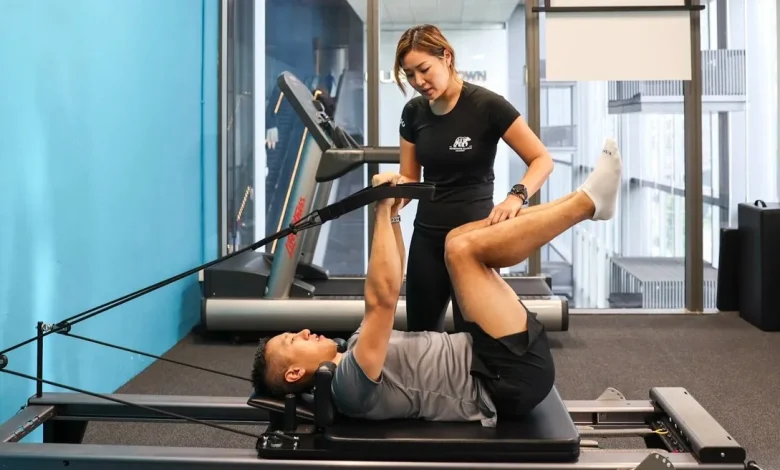
Reformer Pilates uses a spring-based resistance system that allows the body to work against consistent, adjustable tension. This environment encourages precise muscle engagement rather than momentum-driven movement.
Key characteristics that make reformer Pilates effective for desk-related imbalances include:
-
Controlled resistance that supports proper joint alignment
-
Emphasis on slow, deliberate movement patterns
-
Balanced activation of stabilising and prime mover muscles
-
Continuous feedback through the reformer apparatus
Instead of overloading already dominant muscles, reformer Pilates retrains underactive areas to participate again in movement.
Reconnecting the Core Beyond Surface Muscles
Many desk workers associate core strength with abdominal tension. In reality, effective core function involves coordination between deep abdominal muscles, the diaphragm, pelvic floor, and spinal stabilisers.
Reformer Pilates helps restore this coordination by:
-
Encouraging breath-led movement rather than breath holding
-
Activating deep stabilisers through controlled range of motion
-
Reducing reliance on superficial muscles that often overcompensate
This deeper core engagement supports better posture at the desk and more efficient movement away from it.
Hip and Pelvic Alignment in Seated Professionals
Prolonged sitting shortens hip flexors and inhibits glute activation. This imbalance alters pelvic alignment, often leading to excessive anterior pelvic tilt or stiffness through the lower back.
Reformer Pilates targets this issue through:
-
Lengthening-focused resistance exercises for the hip flexors
-
Controlled glute engagement without compressive loading
-
Pelvic stability work that integrates movement rather than isolation
Over time, improved hip function reduces unnecessary strain on the lumbar spine and improves walking efficiency.
Shoulder and Neck Tension From Screen Use
Screen-based work encourages forward head posture and rounded shoulders. This places continuous demand on the neck and upper back muscles, which are not designed for sustained load.
Reformer Pilates supports upper body balance by:
-
Strengthening the mid-back muscles responsible for scapular stability
-
Reducing overuse of neck extensors
-
Encouraging shoulder mobility with controlled resistance
This combination helps redistribute effort across the upper body, reducing chronic tension patterns.
Breathing Efficiency and Desk Work
Restricted posture affects breathing mechanics. When the rib cage is compressed, breathing becomes shallow and dominated by accessory neck muscles.
Reformer Pilates integrates breathing with movement to:
-
Restore rib cage expansion
-
Improve diaphragm engagement
-
Support better oxygen exchange during daily activities
Improved breathing efficiency often translates into better energy levels and reduced mental fatigue during long workdays.
Why Low-Impact Matters for Urban Lifestyles
Many professionals attempt to counter desk work with intense workouts. While these can be effective, they sometimes reinforce existing imbalances if movement quality is poor.
Reformer Pilates offers:
-
Joint-friendly resistance that reduces impact stress
-
Progressive loading that respects individual limitations
-
Movement retraining rather than purely calorie-driven exercise
This makes it suitable for individuals who want sustainable improvement rather than short-term intensity.
Consistency and Adaptability in a Busy Schedule
Desk-related imbalances develop gradually and require consistent correction. Reformer Pilates sessions are structured, time-efficient, and adaptable to different energy levels.
This consistency allows:
-
Gradual neuromuscular re-education
-
Reduced risk of overtraining
-
Long-term movement quality improvement
For professionals balancing work, family, and personal commitments, this approach aligns well with real-life demands.
Integrating Reformer Pilates Into a Modern Lifestyle
When practised regularly, reformer Pilates complements daily life rather than competing with it. Improved posture, breathing, and joint function naturally influence how one sits, stands, and moves throughout the day.
Many practitioners find that:
-
Desk posture improves without conscious effort
-
End-of-day stiffness reduces significantly
-
General body awareness increases during daily activities
Studios such as Yoga Edition emphasise this holistic integration, focusing on sustainable movement habits rather than short-term fitness goals.
Frequently Asked Questions
Q: Can reformer Pilates help if I do not feel pain yet but sit for long hours daily?
A: Yes. Reformer Pilates is particularly effective as a preventive approach. It addresses early-stage imbalances before they develop into pain or movement limitations, making it suitable even when discomfort is minimal or absent.
Q: How often should desk workers practise reformer Pilates to see improvements?
A: Many individuals notice changes with two to three sessions per week. Consistency is more important than intensity, as the goal is neuromuscular retraining rather than exhaustion.
Q: Is reformer Pilates suitable for people with existing lower back stiffness from office work?
A: In most cases, yes. The controlled resistance and supported movements of the reformer can reduce spinal load while improving mobility. Sessions are typically adjusted based on individual comfort and needs.
Q: Will reformer Pilates replace other forms of exercise for desk-bound professionals?
A: It can complement or temporarily replace other workouts, especially when movement quality is compromised. Many people use reformer Pilates as a foundation before returning to higher-impact activities.
Q: How long does it take to notice posture changes from reformer Pilates?
A: Some individuals notice subtle changes within a few weeks, such as reduced shoulder tension or improved sitting comfort. More visible posture changes usually develop over several months of consistent practice.